
Does Anyone Know Your Category Exists?
Ask a founder whether their target buyer knows this kind of product exists and you will almost always get yes. Ask how they know, and the answer thins out considerably.
This matters because it determines what kind of marketing can work at all. If buyers are already searching for what you sell, your job is to capture demand — search, comparison, conversion. If they are not, capture channels have a hard ceiling set by however many people happen to be looking, and growing past it requires creating demand rather than harvesting it.
Founders systematically over-assume their category is known. It is an easy mistake: you spend every day inside the category, and so does everyone you talk to.
Why you cannot analyze your way to the answer
There is no clean read available. Search volume tells you about people already looking, which is the thing in question. Surveys are expensive and unreliable at the sample sizes a smaller company can afford. Your existing customers all found you somehow, so they are the least representative group possible.
Founder self-report is the worst input of all, and it is the one most decisions run on.
So run the test instead of the diagnosis
The move is to stop trying to establish awareness analytically and let a bounded test answer it.
The instrument: a limited-budget campaign into the category rather than the brand — messaging that assumes the buyer does not know this kind of solution exists — sized large enough to produce a readable result, with the success criterion written down before it starts.
Paid social is usually the right instrument. It is cheap relative to broadcast and the read is cleaner. Where volume permits, structure it geographically so you have a control.
The read: does incremental volume appear at a cost per acquisition within reach of your bar?
A null result is not a wasted test. It rules out the awareness hypothesis and points you at conversion, proposition, or competition instead — which is genuinely useful, because those get diagnosed differently and fixed differently.
One case
An SMB-focused SaaS company concluded its buyers largely did not know the category existed, and used radio to create demand. It worked, and became the primary acquisition channel.
A different company, same buyer market, reached the same diagnosis years later — and used paid social instead, because it was cheaper to run and produced a cleaner read.
The diagnosis is the stable part. The instrument is the variable, chosen on cost and cleanness of measurement.
The standing rule
Never accept a founder's self-report on awareness — including your own. Go to external evidence or run a bounded probe. It is one of the cheapest tests available and one of the most consequential, because it determines which half of the marketing universe is even available to you.
There is no clean analytical read on whether buyers know your category exists. Stop trying to diagnose it and run a cheap probe instead.
Related Blogs
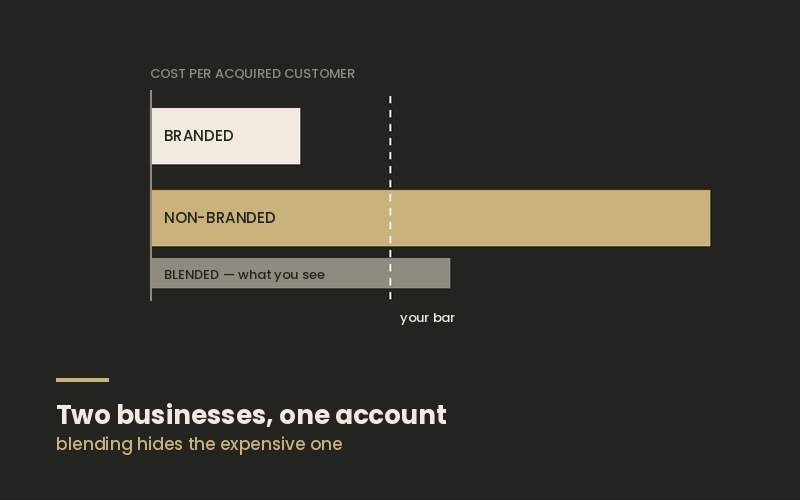
Your Google Ads Account Has Two Businesses In It
Branded and non-branded search are different businesses with different economics, and blending them hides the expensive one.
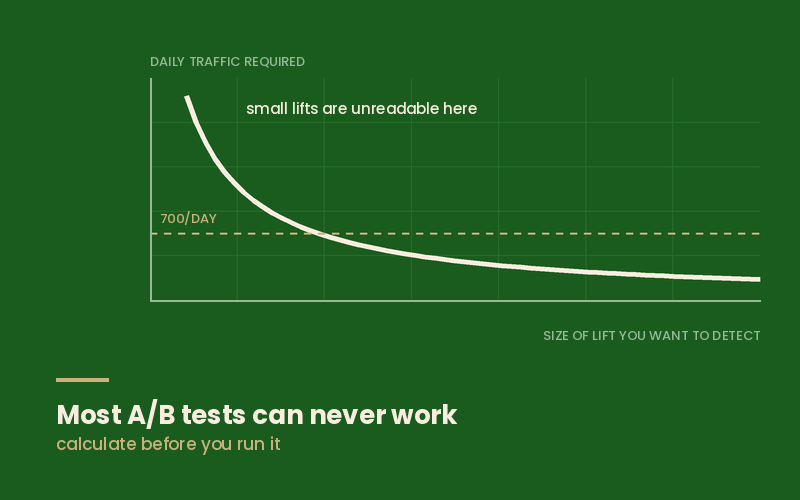
Why Most Website A/B Tests Can Never Work
You can calculate before you start whether a test has enough traffic to produce an answer. Most don't, and they end in "we're not sure."
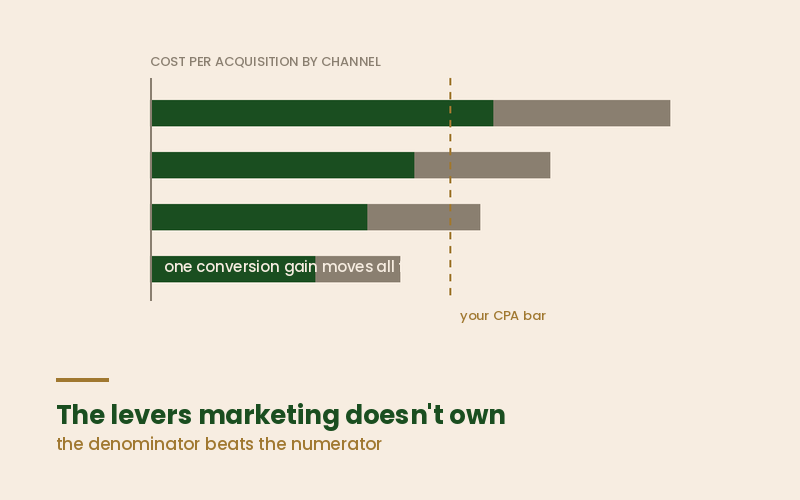
The Conversion Levers Marketing Doesn't Own
The variables with the largest effect on conversion are usually owned by finance or operations, and no one has priced the marketing consequence.
Get in touch
with us
Contact Us